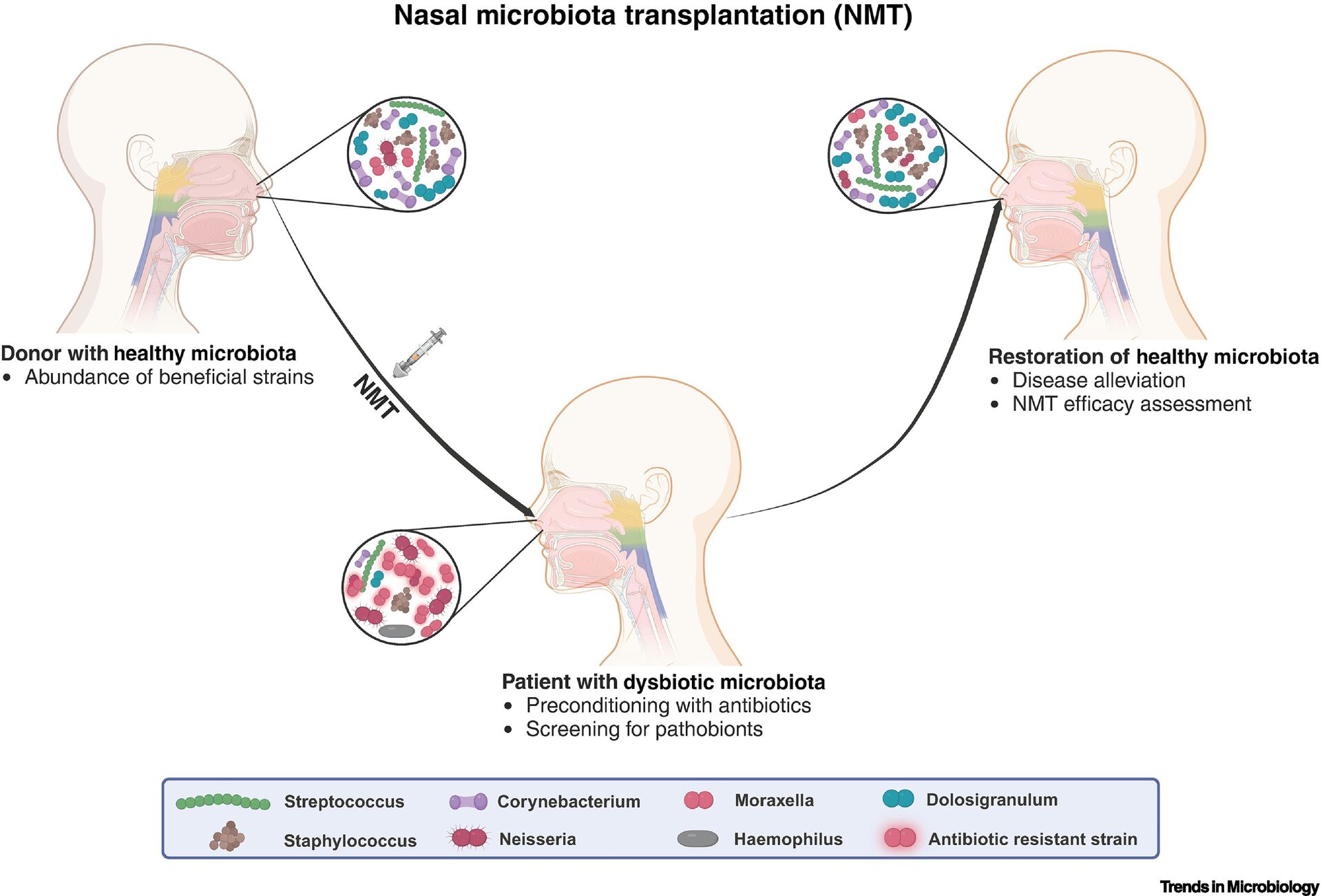
A nasal microbiota transplantation (NMT) is a procedure that involves transferring healthy nasal microbiota from donors to patients suffering from conditions like chronic rhinosinusitis (CRS) or infections caused by antibiotic-resistant bacteria. Early studies are promising, but much remains to be explored.
"The concept of NMT is groundbreaking. It builds on our understanding of microbial ecosystems and their impact on human health, extending these principles to the nasal microbiota", says Professor Fernanda Petersen from the faculty of Dentistry at the University of Oslo, who has contributed to an article about this concept alongside with colleague Dr Achal Dhariwal, and collaborators in Czechia.
What is the Nasal Microbiota?
The nasal passages are home to a diverse microbial community, including bacteria, viruses, and fungi. In healthy individuals, this microbiota plays a protective role. However, disruptions, or “dysbiosis,” can lead to conditions like CRS. Studies show that dysbiosis often involves an overgrowth of potentially harmful bacteria such as Staphylococcus aureus or Haemophilus influenzae, paired with a loss of beneficial microbial diversity.
"The nasal microbiota acts as a first line of defense", explains Dr Petersen. "When this balance is disrupted, it can pave the way for inflammation and infection. Restoring this balance is key".
Early Success with NMT in CRS
CRS affects millions, causing persistent inflammation in the sinuses. Standard treatments—antibiotics, corticosteroids, and surgery—often provide only temporary relief. Recent studies suggest NMT could offer a long-term solution.
One trial treated CRS patients with donor nasal microbiota after an antibiotic course. Results showed significant symptom improvement and increased microbial diversity three months post-treatment. However, some patients experienced mild adverse effects, such as fever or sinusitis-like symptoms.
"These findings are a strong proof of concept", Dr. Petersen notes. "But we need larger, more controlled studies to understand the benefits and risks fully."
Combating Antibiotic Resistance
The rise of antibiotic-resistant microbes is a growing concern. The nasal cavity, a reservoir for pathogens like Streptococcus pneumoniae and Staphylococcus aureus, plays a critical role in their spread. By restoring a healthy microbiota, NMT may help displace these resistant strains, reducing reliance on antibiotics.
"This is where NMT could have a game-changing impact", says Dr. Petersen. "By fostering a competitive environment, we may limit the colonization of resistant microbes, promoting a healthier microbial balance".
Dr. Dhariwal adds "Antimicrobial resistance is a global challenge, and exploring alternative approaches like NMT is crucial. By leveraging our growing understanding of microbial interactions, we could reduce dependence on traditional antibiotics".
Challenges and Future Directions
While promising, NMT faces hurdles. Screening donors to prevent pathogen transmission is essential. Additionally, long-term safety and efficacy data are lacking. Advances in synthetic microbiota, engineered communities of beneficial microbes, could offer safer alternatives, but their development is still in early stages.
"One exciting avenue is the use of prebiotics or microbial metabolites to support beneficial nasal microbes", Dr Petersen suggests. "This could complement NMT or even replace it in certain cases".
To move forward, researchers aim to refine NMT protocols, establish regulatory guidelines, and explore its potential in other respiratory conditions. Preclinical models, like germ-free animals colonized with defined microbiota, could illuminate the mechanisms behind its therapeutic effects.
Looking Ahead
"NMT is more than just a novel therapy; it represents a paradigm shift in how we approach respiratory health", says Petersen.
By leveraging lessons from FMT, scientists hope to unlock the full potential of the nasal microbiota.
"We are at the forefront of an exciting era", concludes Dr. Petersen." If successful, NMT could revolutionize treatment for CRS and AMR infections, offering new hope for patients worldwide".