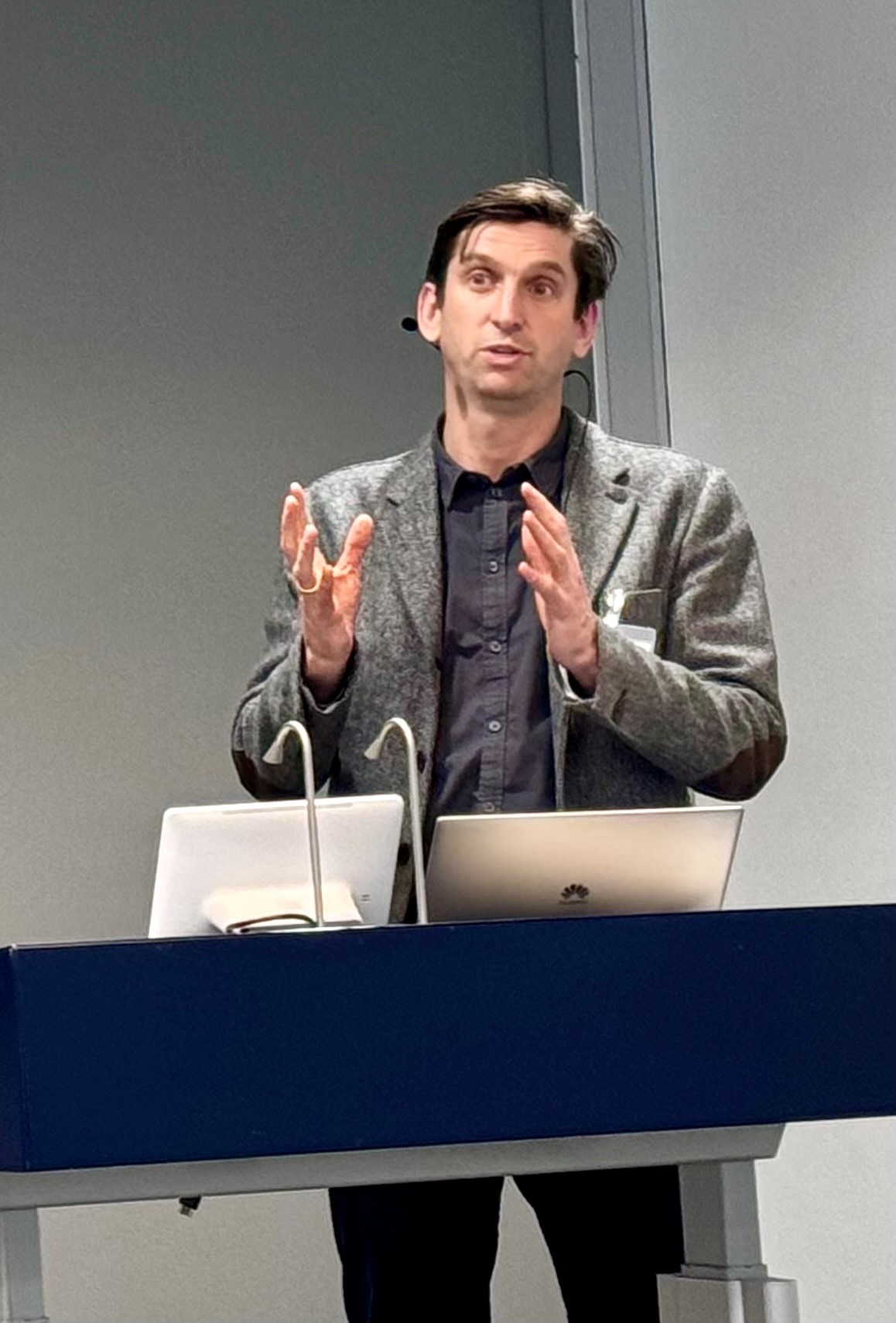
Our Department recently participated in the Norwegian Synchrotron Research Meeting (Norsk fagmøte for Synkrotronforskning), hosted by the Research Council of Norway at Lysaker. This gathering brought together prominent Norwegian research groups and directors from the European Synchrotron Radiation Facility (ESRF) in Grenoble, France, to explore strategies for enhancing Norway’s utilisation of one of the world’s most advanced synchrotron research facilities.
Synchrotron research employs extraordinarily intense and focused X-ray beams, enabling scientists to investigate materials' internal structure and dynamics- including biomaterials — at the atomic and molecular levels. This makes it an invaluable tool in biology, medicine, cultural heritage, chemistry, and materials science.
Department of Biomaterials’ Contribution
Håvard J. Haugen from our department presented the research possibilities at the ESRF’s beamlines—particularly highlighting phase contrast techniques for life science applications. This approach allows for detailed visualisation of soft tissues and biomaterials without needing contrast agents or invasive sample preparation. Phase contrast imaging can reveal subtle differences in density and composition, giving new insights into bone, tissue engineering scaffolds, and other biomaterials.
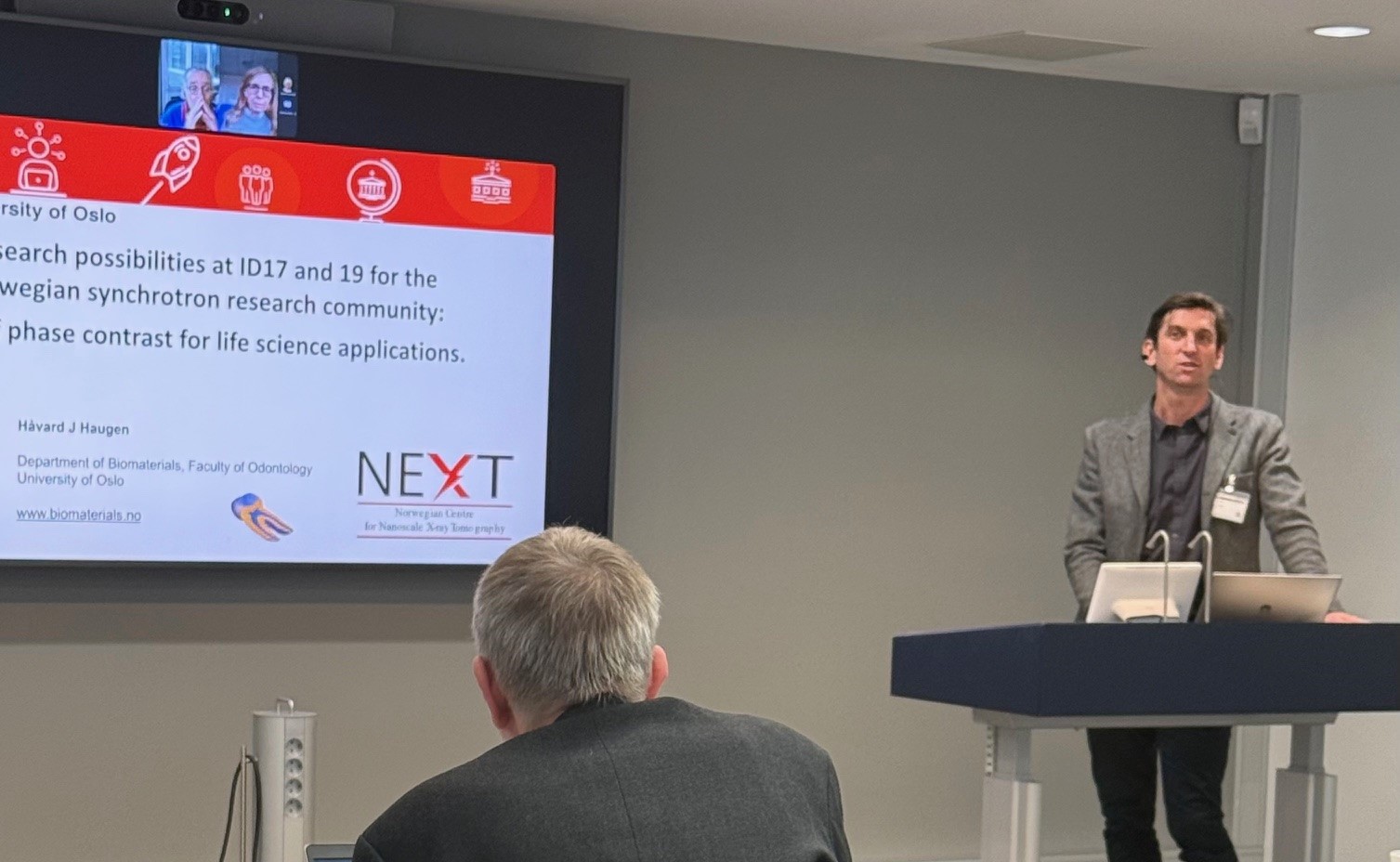
Broad Range of Applications
The meeting showcased the breadth of synchrotron-based research in Norway, from studying catalysis under near-industrial conditions to investigating molecular details of myelin. Presentations highlighted how synchrotron techniques help develop better batteries, probe porous materials for environmental applications, examine enzyme-ligand interactions in drug discovery, and even analyse the composition of Viking treasures and Edvard Munch’s painting materials.
Strengthening Collaborations
By uniting various research communities at this event, the Research Council of Norway aims to ensure that Norwegian scientists maximise their access to—and usage of—the ESRF. The council also provides targeted funding for synchrotron-related projects, helping to support high-impact research with direct societal benefits. Attendees could forge new connections, discuss emerging research directions, and explore further leveraging the ESRF’s state-of-the-art infrastructure.
Looking Ahead
The Department of Biomaterials is proud to be part of these collaborative efforts. We look forward to the continued exchange of ideas, interdisciplinary projects, and groundbreaking discoveries made possible through the ESRF. Synchrotron research offers a unique window into biomaterials at unprecedented resolution, and we remain committed to advancing innovative solutions in fundamental science and clinical translation.
Photos by : Janne E Reseland