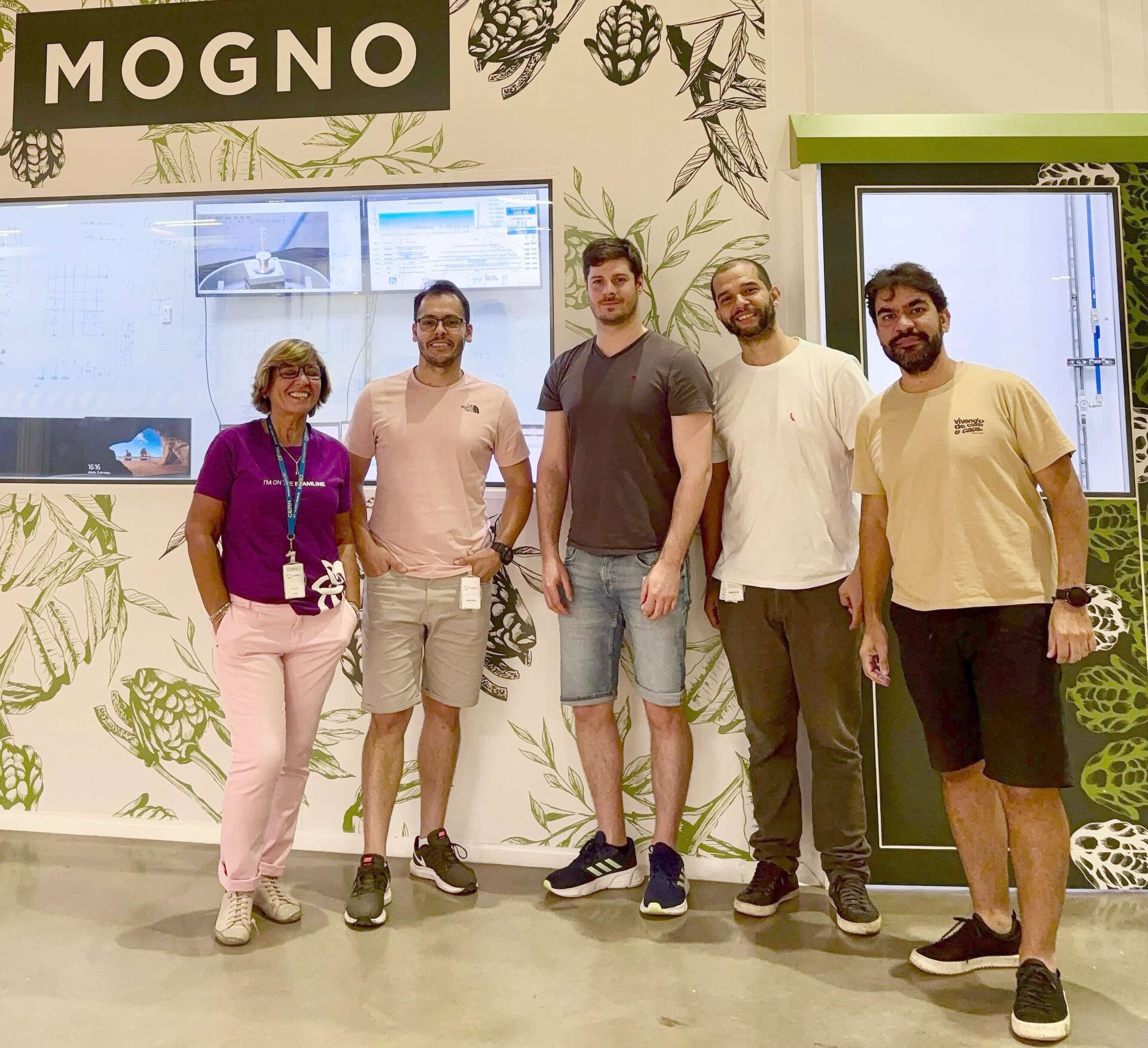
Last week, our colleagues Torben Hildebrand and Dr. Liebert Nogueira visited the MOGNO micro- and nanotomography beamline at Sirius, located in the Brazilian Synchrotron Light Laboratory (LNLS). Renowned for its “zoom-tomography” approach, MOGNO enables researchers to investigate samples at multiple resolutions—from micro- to nanometer scales—in a single experimental run. It also supports time-resolved (4D) tomography, enabling the observation of dynamic processes within materials under specialized in-situ conditions.
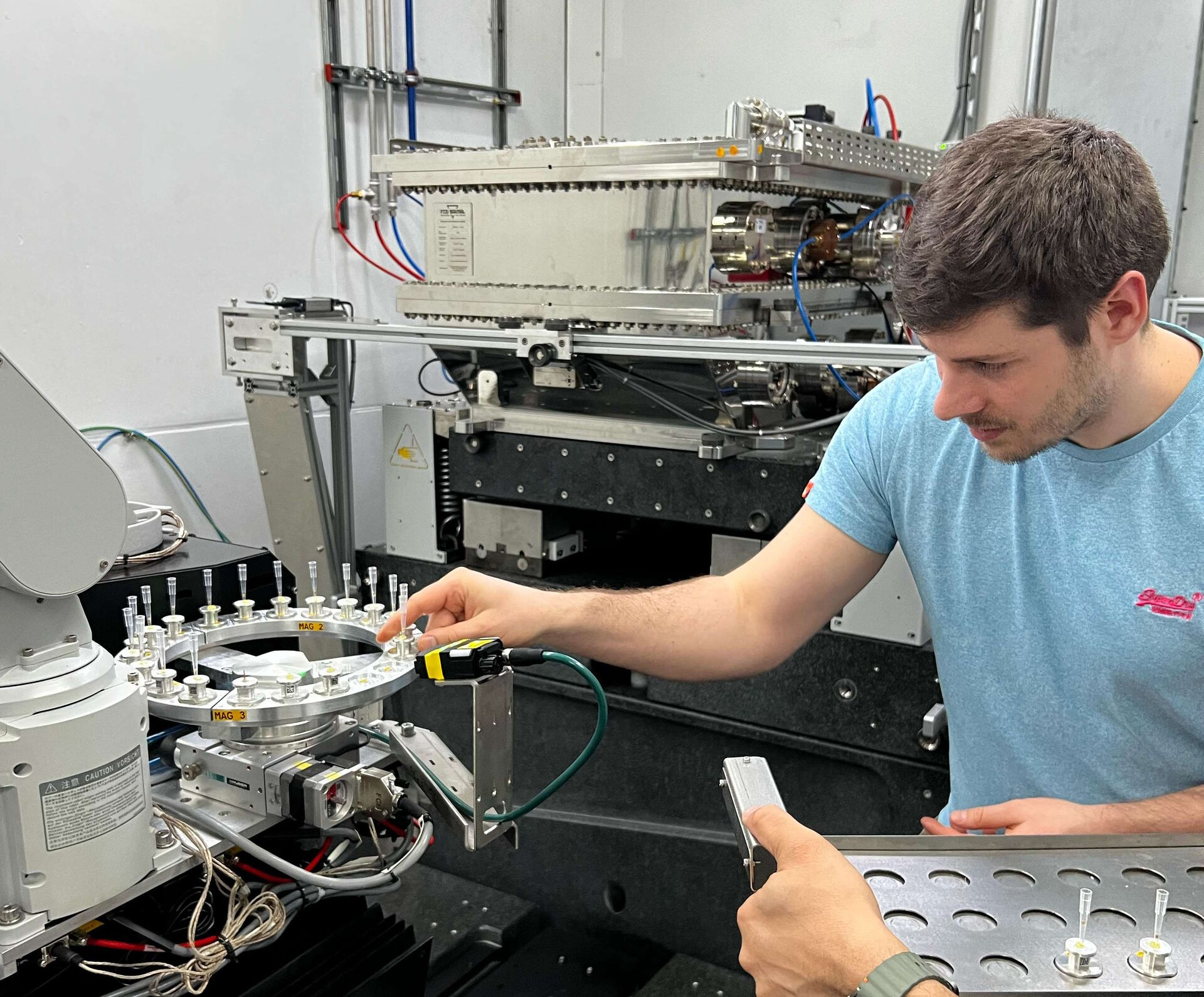
Torben and Liebert learned about MOGNO’s advanced phase-contrast and absorption imaging methods during their visit. These techniques yield exceptionally detailed three-dimensional data, which can be vital for geology, biology, cultural heritage, and biomaterials research applications. The beamline team’s expertise and state-of-the-art instrumentation underscore the enormous potential of synchrotron-based tomography for cutting-edge scientific exploration.
We look forward to new research collaborations that harness MOGNO’s advanced imaging capabilities. Congratulations to Torben and Liebert for a productive visit, and many thanks to the LNLS team for their warm hospitality. This collaboration represents our ongoing commitment to innovation and excellence in biomaterials research. Also, thanks to internationalization travel support from UiO:Life Science.
This research has been supported by the Hanseatic Life Science Research Infrastructure Consortium (HALRIC). This HALRIC pilot project seeks to bridge the knowledge gap between soft and hard tissue structures, particularly in bones and teeth, by employing advanced imaging techniques such as contrast-enhanced micro-CT and synchrotron-based methods. Bringing together experts from Lund University, Malmö University, and the University of Oslo, the initiative leverages state-of-the-art research facilities (MAX IV, Elettra, and Mongo) to refine non-destructive imaging. The anticipated outcomes include more accurate visualization of cellular interactions and improved diagnostic and therapeutic strategies in dental and orthopedic care.