Surface modification of titaniumThis project aims to study the effect of titanium surface bio-modifications using extracellular matrix molecules participating in the reciprocal cross talk between tissues cells during hard tissue development by using several microscopy methods. |
 |
Characterisation of biological effects of nano –and micro sized particles used in dental biomaterialsThe aim of this study is to elucidate possible biological effects of commonly used dental filler particles of different sizes and composition. This includes physicochemical characterization of the particles, study of cellular uptake of nanoparticles, and to elucidate the capacity of nano -and micro particles to trigger inflammatory processes. |
 |
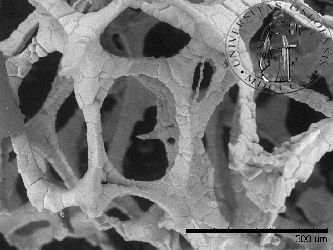
Scaffold for bone engineeringDifferent ceramic material are currently under investigation to improve the mechanical strength of scaffolds for bone engineering purposes. Todays bone engineering scaffold cannot be used in clinical load bearing application |
 |
Effects of epigenetic and environmental factors on biomineralizationCharacterize and analyse the role of enamel proteins as signal molecules during hard tissue formation in vitro and in vivo. Examine the impact of disease related conditions and environmental factors on tooth formation. |
 |
Wear resistance on composite filling materials - a correlation study between particle size and filler volumeThis study aims to compare and evaluate the effect of different particle sizes and particle filling volumes on the wear resistance of composite dental materials. In addition it is our believe that our newly developed model, which test wear resistance of dental composite on both dentin and enamel surfaces, is a more relevant model than earlier reported. |
 |
Effect of meloblastin (AMBN) in boneAmeloblastin is known as a tooth-specific protein, mainly synthesized and secreted into developing enamel matrix by enamel-forming ameloblasts. A physiological role for ameloblastin protein in tooth development remains unknown, but it has been suggested to control crystal growth, function as growth factor and cell signalling. |
 |
Biomolecular coatings on titanium implants for enhanced for bone adhesionThin layers of biomolecules are coated on surfaces of commercially pure titanium. In order to optimise the coating process, the coated surfaces are characterise in terms of physical and chemical properties. Additionally the biological performance is characterised both with in vitro and in vivo models |
 |
Publications
(last five years)